The Psychology of Beautiful Sadness
Why do people willingly listen to sad songs, read tragic novels, and return to stories filled with grief and loss? At first glance, the behavior seems contradictory. Most people naturally avoid sadness in everyday life, yet countless readers, listeners, and viewers actively seek it through art. Some of humanity’s most beloved artistic works are also among its saddest.
Readers return to The Raven. Audiences cry during tragic films. Listeners replay melancholic music long after happier songs have faded from memory. The attraction is not accidental. Psychologists, philosophers, and artists have spent centuries trying to understand why sorrow can sometimes feel beautiful rather than painful.
This phenomenon is often described as beautiful sadness: the transformation of grief, longing, melancholy, and loss into meaningful aesthetic experiences. Far from being a contradiction, it may reveal something essential about how human beings process emotion, memory, and meaning.
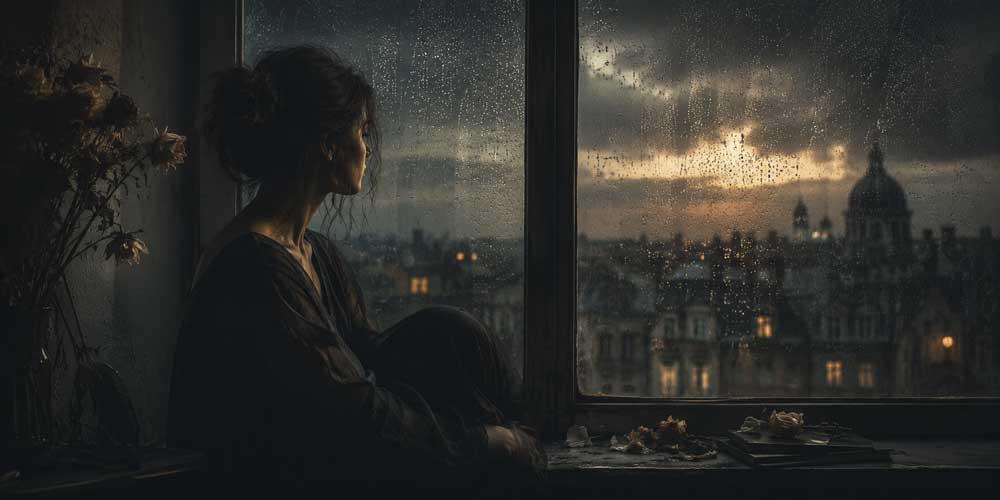
When Sadness Becomes Beautiful
The sadness experienced through art differs fundamentally from sadness encountered in everyday life.
Real grief can be overwhelming because it directly affects our lives. Artistic sadness creates emotional distance while preserving emotional truth. Readers may mourn fictional characters, listeners may feel moved by songs about heartbreak, and audiences may cry during tragic films, yet they remain protected from the real-world consequences of those experiences.
This distance changes the way sadness is perceived. Art provides structure, meaning, and perspective, transforming emotions that might otherwise feel unbearable into opportunities for reflection and understanding.
As a result, grief becomes contemplation, longing becomes beauty, and melancholy becomes a source of emotional insight. The sadness remains genuine, but it exists within a framework that encourages reflection rather than despair.
This transformation lies at the heart of beautiful sadness and helps explain why audiences repeatedly return to works that evoke sorrow.
The Gothic Origins of Beautiful Sadness
The modern fascination with beautiful sadness owes much to Gothic literature.
During the eighteenth and nineteenth centuries, Gothic writers challenged the idea that art should focus primarily on happiness, virtue, or moral instruction. Instead, they explored grief, obsession, isolation, memory, longing, and mortality.
The Gothic imagination discovered that sadness possessed a unique emotional richness. Loss could deepen appreciation. Longing could intensify beauty. Melancholy could reveal aspects of human experience that joy often concealed.
Rather than treating sorrow as a weakness, Gothic writers transformed it into a source of emotional depth. Their haunted castles, tragic romances, ruined landscapes, and grieving protagonists demonstrated that sadness could possess artistic power equal to happiness.
This perspective would later influence Romantic poetry, Symbolism, noir fiction, Gothic music, and countless artistic movements that followed. Beautiful sadness became one of the Gothic tradition’s most enduring contributions to modern culture.
Edgar Allan Poe and the Aesthetics of Grief
No writer explored beautiful sadness more consciously than Edgar Allan Poe.
Throughout his poetry and fiction, Poe transformed grief into an artistic experience capable of producing beauty, longing, and emotional resonance. In The Raven, the narrator’s sorrow becomes inseparable from the poem’s haunting atmosphere. The repeated word “Nevermore” is devastating because it captures a universal reality: some losses cannot be reversed.
Similarly, Annabel Lee transforms mourning into something lyrical and timeless. The poem is not simply about death. It is about memory, devotion, and the persistence of love beyond loss.
Poe believed sadness possessed extraordinary artistic potential.
“The death, then, of a beautiful woman is, unquestionably, the most poetical topic in the world.”
— Edgar Allan Poe, The Philosophy of Composition
Modern readers may disagree with Poe’s specific conclusion, but his broader insight remains influential. He understood that grief could create emotional intensity unlike any other feeling.
His goal was not to glorify suffering. Instead, he sought to transform painful emotions into meaningful aesthetic experiences capable of moving audiences long after the original loss had occurred.
Through Poe, beautiful sadness became one of the defining elements of Gothic literature.
Romantic Melancholy and Emotional Depth
The Romantic movement expanded many of the ideas already present within Gothic literature.
Romantic writers often viewed melancholy not as a negative condition but as evidence of emotional depth and self-awareness. Poets such as Lord Byron and Percy Bysshe Shelley explored longing, memory, loss, and unattainable ideals, suggesting that some of life’s most meaningful experiences derive their significance precisely because they cannot last forever.
Love becomes precious because it is fragile. Memory becomes powerful because the past cannot be recovered. Beauty becomes moving because it is temporary.
This perspective helped establish one of the central principles behind beautiful sadness. Certain emotions become meaningful not despite their pain, but because of it.
Through this lens, sadness becomes more than suffering. It becomes a way of understanding what matters most.
Why Sad Art Feels Good
The central paradox of beautiful sadness has a clearer explanation than it might seem.
Why do people willingly seek emotions they would normally avoid?
Modern psychology suggests that art creates a unique emotional environment. It allows individuals to experience sadness without facing the real-world consequences that usually accompany it.
A tragic novel can evoke grief. A melancholic song can awaken memories. A sorrowful film can bring viewers to tears. Yet throughout the experience, audiences remain aware that they are safe.
This combination of emotional intensity and psychological security helps explain why sadness often becomes pleasurable when experienced through art. The emotion remains genuine, but the threat disappears. People are free to explore difficult feelings without becoming overwhelmed by them.
What emerges is a rare emotional experience in which sorrow becomes meaningful rather than destructive. The sadness is real, but it exists within a framework that encourages reflection rather than despair.
Freud and the Meaning of Melancholy
Sigmund Freud explored sadness extensively in his essay Mourning and Melancholia.
Freud distinguished between mourning, which follows a recognizable loss, and melancholia, which often involves a more complex and enduring relationship with absence, longing, and identity.
Although aspects of Freud’s theories remain debated today, his work introduced an important idea: painful emotions often contain hidden psychological significance.
Sadness is rarely just sadness. It frequently reflects attachment, memory, desire, regret, or unresolved emotional experiences.
Beautiful sadness resonates because it gives form to these emotions. Art allows people to confront feelings that may otherwise remain difficult to understand or express.
In this sense, melancholic art becomes a bridge between conscious awareness and deeper emotional realities. The sadness portrayed in literature, music, and film often feels powerful because it touches emotions audiences already recognize within themselves.
Carl Jung and the Shadow
Carl Jung approached sadness from a different perspective.
According to Jung, every individual possesses aspects of the self that remain hidden, ignored, or suppressed. He referred to this dimension as the Shadow.
The Shadow contains emotions, fears, desires, and experiences that people often struggle to acknowledge openly. These hidden aspects of personality do not disappear simply because they are ignored. Instead, they continue influencing behavior from beneath conscious awareness.
Art provides a safe way to encounter these hidden dimensions of the self. Melancholic literature, music, and visual art allow audiences to engage with emotional experiences that might otherwise remain buried beneath everyday routines.
For Jung, confronting difficult emotions contributed to a more complete understanding of human identity. This may help explain why beautiful sadness often feels strangely comforting despite its subject matter.
Catharsis and Emotional Release
Another explanation comes from the ancient concept of catharsis.
Originally developed by Aristotle, catharsis describes the emotional release that occurs when audiences engage deeply with tragedy.
A powerful story can provoke tears. A song can unlock buried memories. A poem can articulate feelings that have remained unspoken for years.
The result is often relief rather than distress.
Instead of intensifying suffering, art can help individuals process and release emotions. This helps explain why people frequently return to works that evoke sadness.
The experience is not simply about pain. It is about emotional movement, understanding, and renewal. Through catharsis, difficult emotions become manageable because they are acknowledged rather than avoided.
The Feeling of Being Moved
Recent psychological research suggests that people are often drawn not to sadness itself but to a related emotional state sometimes described as being moved.
This feeling combines sorrow with appreciation, empathy, tenderness, gratitude, and connection.
A tragic story may bring tears while simultaneously creating feelings of beauty and meaning. A melancholic song may evoke loss while strengthening a sense of connection to memories, relationships, and personal experiences.
This mixture helps explain why beautiful sadness feels fundamentally different from ordinary despair.
The experience contains pain, but it also contains value. People do not seek sadness because they enjoy suffering. They seek emotional experiences that deepen their understanding of themselves, their memories, and the people around them.
Why Melancholy Creates Meaning
The deepest appeal of beautiful sadness may lie in its relationship to meaning.
Many of life’s most significant experiences involve impermanence. Love becomes precious because it can end. Friendships matter because they are fragile. Memories become valuable because they cannot be relived exactly as they occurred.
Melancholy draws attention to these realities.
Rather than diminishing beauty, sadness often intensifies it by reminding us that nothing lasts forever.
This helps explain why melancholic art continues resonating across centuries and cultures. Beautiful sadness transforms painful truths into emotional insight, revealing that sorrow and beauty are not always opposites.
Sometimes they deepen one another, creating experiences that feel more meaningful than either could alone.
Beautiful Sadness in Modern Music
The appeal of beautiful sadness did not disappear with Gothic literature or Romantic poetry.
It continues to shape contemporary music, where melancholy often serves as a source of emotional depth rather than despair.
Few modern artists explore this territory more effectively than Nick Cave. Throughout his career, Cave has written about grief, love, spiritual uncertainty, and loss with unusual honesty. What makes his work particularly powerful is that sadness is rarely presented as an ending. Albums such as Skeleton Tree and Ghosteen transform personal tragedy into a search for meaning, connection, and even moments of transcendence.
A similar dynamic appears in the work of Lana Del Rey. Her music often blends nostalgia, memory, romance, and melancholy into a cinematic aesthetic. Rather than focusing on grief alone, she frequently explores the tension between idealized memories and reality, creating songs that feel both beautiful and emotionally fragile.
These artists demonstrate how beautiful sadness continues evolving while preserving the emotional qualities that first attracted Gothic and Romantic writers centuries ago.
Why Audiences Keep Returning to Melancholy
The enduring popularity of melancholic art suggests that beautiful sadness fulfills an important psychological function.
People often seek experiences that help them understand themselves. Joy can be uplifting, but melancholy frequently encourages reflection. It invites audiences to slow down, remember, contemplate, and connect with aspects of life that are easily overlooked.
Loss, memory, longing, change, and mortality are universal experiences. Art that explores these themes often feels deeply personal because it reflects realities that nearly everyone encounters.
Melancholic art also creates a sense of shared humanity. It reminds people that sadness is not an isolated experience. Others have felt similar emotions, expressed them creatively, and transformed them into something meaningful.
This helps explain why audiences continue returning to works that evoke sorrow generation after generation.
Why Beautiful Sadness Endures
Beautiful sadness endures because it transforms painful emotions into meaningful experiences.
From Gothic literature and Romantic poetry to contemporary music and modern psychology, artists and thinkers have repeatedly recognized that sorrow possesses a unique emotional power. When filtered through art, sadness becomes more than suffering. It becomes reflection, empathy, understanding, and emotional insight.
The attraction of beautiful sadness does not come from a desire for pain. It comes from a desire for meaning. People seek these experiences because they reveal truths about love, memory, loss, and human connection that happiness alone cannot always express.
This may be why melancholic art continues resonating across centuries. It reminds us that some of life’s most meaningful experiences contain both beauty and sadness at the same time. Rather than diminishing one another, these emotions often deepen each other, creating the emotional complexity that makes great art unforgettable.
Wear the Darkness
If The Psychology of Beautiful Sadness resonates with your fascination for Gothic literature, melancholy, memory, and emotional depth, explore the Edgar Allan Poets store. Our designs celebrate Poe, dark aesthetics, and the beauty that emerges from shadow.

Frequently Asked Questions
What is beautiful sadness?
Beautiful sadness is an aesthetic experience in which grief, melancholy, longing, or loss are transformed into something emotionally meaningful through art.
Why do people enjoy sad music and stories?
Art allows people to experience difficult emotions safely, creating opportunities for reflection, empathy, catharsis, and emotional understanding.
How did Edgar Allan Poe contribute to the idea of beautiful sadness?
Poe transformed grief and loss into powerful artistic experiences, particularly in works such as The Raven and Annabel Lee, helping establish melancholy as a source of aesthetic beauty.
Why does melancholic art feel comforting?
Melancholic art allows people to explore difficult emotions in a safe environment, transforming sadness into reflection, meaning, and emotional connection.
Why is melancholy important in Gothic culture?
Gothic culture frequently explores memory, loss, longing, mortality, and emotional complexity, making melancholy one of its defining themes.