Chamelleont Dead Lines Review
From the opening moments, Chamelleont’s “Dead Lines” feels like an epic, philosophical journey suspended between the past and the future. There is something familiar in its alternative rock roots, yet the production keeps pulling you toward unfamiliar territory. This is an album that asks you to listen closely, to the music and to the questions hiding inside the lyrics.
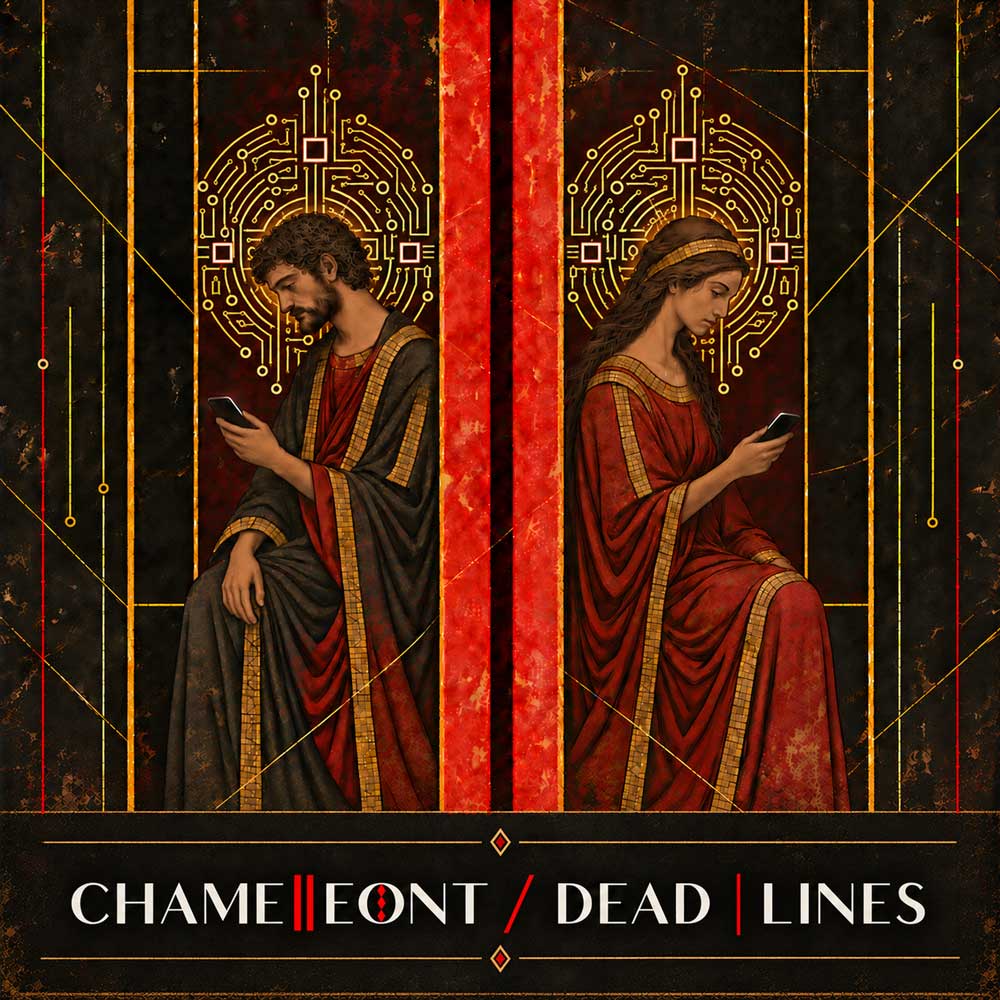
The opening track immediately caught my attention with its intriguing cadence and warm, intense vocals. The voice guides you through the story with conviction, while the lyrics make you reflect on how easily our lives can fall under the control of the powerful. You can already sense that this record has something to say, and the music gives those thoughts room to develop.
“Return The Item” follows with an introspective atmosphere that reminded me of the rock ballads of the ’90s. There is that same willingness to let emotion breathe, although the production brings a more modern touch. The song takes its time, allowing the vocal interpretation and the arrangements to draw you deeper into its nostalgic mood.
“Coin Toss Kiss” opens with an airy guitar that seems to widen the space around you. Then the rhythm introduces a mysterious, insistent pulse, and you find yourself moving your head along with it. I liked the way the openness of the guitar interacts with that darker rhythmic undercurrent. It feels like following a road without knowing what waits beyond the next turn.
Dead Lines – Sound and Atmosphere
One of the songs that struck me most is the title track, “Deadlines.” The guitar has a strong personality, and the slow pace carries a tension that keeps you listening. Nothing feels rushed. Each phrase has time to settle, giving the lyrics space to explore self-identity as the album moves toward questions about truth and its decay.
This is where the journey becomes particularly personal. The music encourages you to look inward, to question the ideas you have accepted and the identity you have built around them. The restrained movement of the song gives those reflections an almost hypnotic quality.
“A Singularity” opens with another atmospheric, intense introduction. By this point, I felt that “Dead Lines” was an album best experienced without distractions. You need to let these songs unfold and allow their meaning to settle in your soul. There is a thoughtful connection between the mood of the arrangements and the weight of the subjects being explored.
I also enjoyed “Trickle Down,” especially its memorable melody. It is one of those songs that makes you want to sing along, bringing a more immediate connection while maintaining the intensity of the record. That melodic instinct gives the album a welcome balance: there is plenty to think about, but the songs also reach you on a purely instinctive level.
Dead Lines – Performance and Production
“Alexander” closes the album by confronting a question the artist describes as “whether the pursuit of certainty ultimately destroys possibility itself.” After everything that comes before it, this feels like a fitting thought to leave hanging in the air. The closing song gives the journey a sense of arrival while leaving your mind free to keep wandering.
Throughout “Dead Lines,” the production combines the familiarity of alternative rock with modern sounds and approaches. The result occupies an interesting space between different eras. You can recognize echoes of the past, yet the music keeps looking ahead, and that tension suits the philosophical nature of the album.
Chamelleont was a beautiful discovery for me. “Dead Lines” has intensity, personality, and the patience to let its ideas develop. I recommend giving it a full listen, letting the guitars, the voice, and the lyrics lead you through a journey that continues even after the final song.
Introspective
Spotify
About Edgar Allan Poets
Edgar Allan Poets is a noir rock band built on the literary universe of Edgar Allan Poe. For over a decade the band has explored Poe's psychology, Gothic aesthetics, Victorian darkness, and his influence on modern culture — through music, writing, and this archive. Their album 555 and store collections translate Poe's darkest visions into sound and design. Read more about the band →
Reviews
Get Our T-Shirt!

Noir News


