The Aesthetics of Fog: Atmosphere as Emotional Language
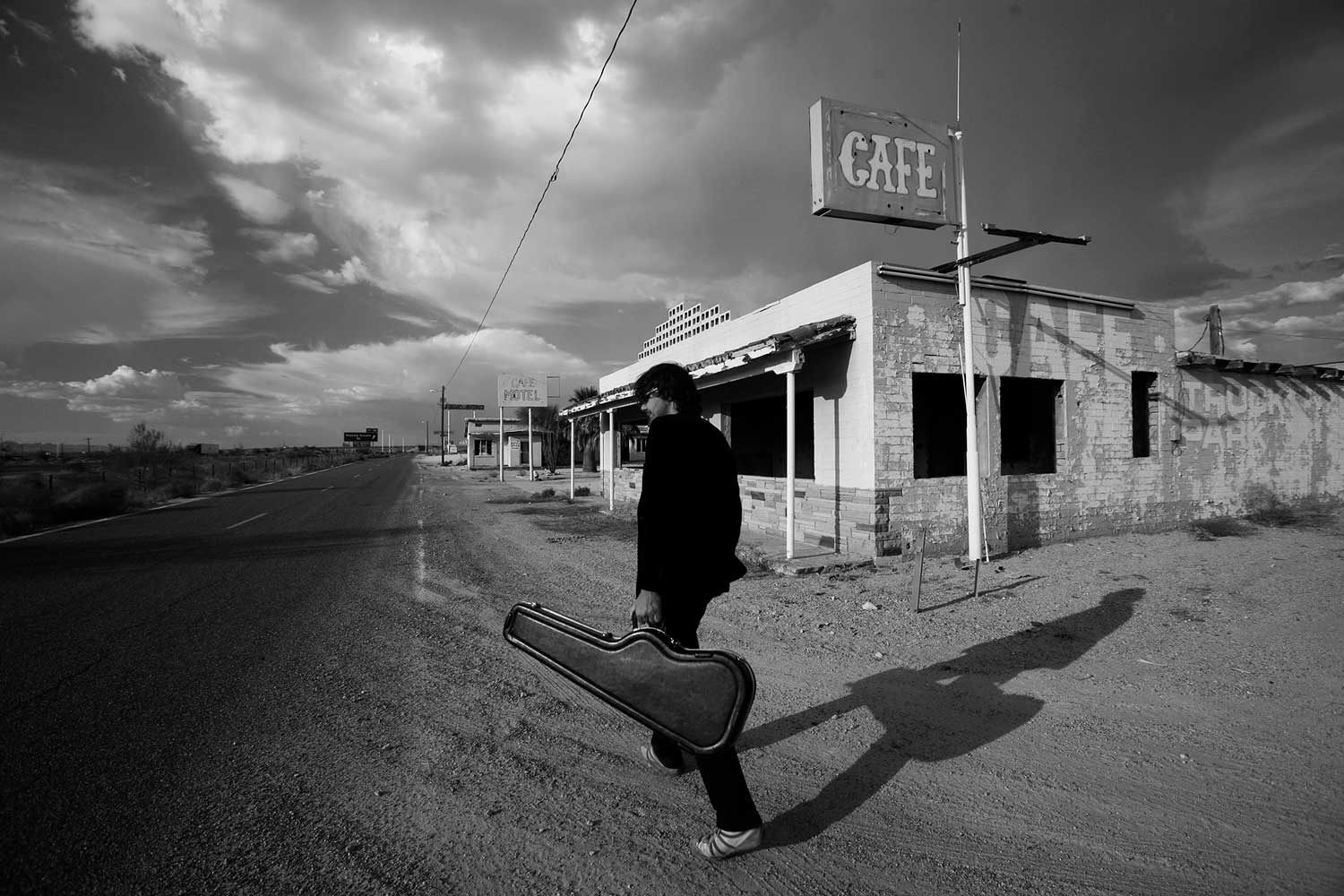
A road disappears into mist. A silhouette emerges for a moment before dissolving again into whiteness. The landscape remains familiar, yet suddenly feels uncertain. Few visual elements possess the emotional power of fog. Unlike darkness, which hides the world completely, fog allows us to see just enough to become uneasy. It transforms certainty into ambiguity and turns ordinary places into psychological landscapes.
This is why fog has remained one of the most enduring symbols in Gothic literature, noir cinema, and visual art. It is not merely weather. It is emotional architecture. Fog externalizes states of mind that are otherwise difficult to represent. Grief, memory, fear, longing, and uncertainty become visible through mist. What exists inside the character suddenly appears in the world around them.
The greatest Gothic and noir creators understand this instinctively. Edgar Allan Poe uses oppressive atmospheres to mirror psychological decay. Film noir directors fill city streets with mist to blur moral boundaries. Modern filmmakers continue using fog whenever reality itself begins to feel unstable. Across centuries and artistic mediums, the symbolism remains remarkably consistent. Fog appears whenever human beings confront the unknown.

Why Fog Became Gothic Literature’s Favorite Symbol
The Gothic imagination emerged during the late eighteenth century as a reaction against the Enlightenment’s faith in reason and order. Philosophers celebrated logic. Scientists mapped the natural world. Rational thought appeared capable of explaining almost everything.
Yet human experience stubbornly resisted complete explanation. Fear, desire, dreams, grief, and obsession continued shaping people’s lives. Gothic writers became fascinated by these darker territories of consciousness. Their stories explored the emotional realities that reason alone could not fully illuminate.
Fog proved to be the perfect visual symbol for this project. It exists between visibility and blindness. The world remains present but becomes difficult to interpret. Familiar landscapes suddenly appear strange. Certainty dissolves.
Ann Radcliffe understood this power in The Mysteries of Udolpho. Her landscapes frequently blur into uncertainty, forcing both characters and readers to navigate environments where appearances cannot be trusted. The emotional effect is immediate. Anxiety emerges not because danger is visible but because it might be hidden somewhere beyond sight.
This technique would become one of Gothic literature’s defining characteristics. Terror often proves more effective when it remains partially concealed. Fog allows the imagination to participate in the creation of fear.
Poe and the Psychology of Mist
Few writers understood atmosphere more profoundly than Edgar Allan Poe. While he rarely relied on literal fog as frequently as some later Gothic authors, his fiction constantly creates atmospheric conditions that function in similar ways. Landscapes become emotionally charged. Buildings seem to absorb psychological states. The environment reflects inner turmoil.
The opening of The Fall of the House of Usher remains one of the most famous examples in Gothic literature:
“During the whole of a dull, dark, and soundless day in the autumn of the year, when the clouds hung oppressively low in the heavens…”
Notice that Poe begins not with action but with atmosphere. Before readers encounter Roderick Usher, before any supernatural suggestion appears, they enter a world already saturated with emotional unease.
Weather does not merely decorate the scene. Poe’s narrator experiences the landscape as psychologically oppressive because the environment reflects deeper themes of decay, anxiety, and collapse.
This relationship between outer atmosphere and inner psychology would become one of Poe’s most influential contributions to Gothic storytelling. He understood that fear often begins long before any visible threat appears. Sometimes a landscape feels wrong before we can explain why.
Fog operates according to the same principle. It transforms external reality into a reflection of emotional uncertainty. The viewer does not simply see mist. The viewer experiences ambiguity.
One reason fog remains so effective is that it dissolves the boundary between physical and psychological space. A fog-covered road can represent a literal journey, but it can also symbolize confusion, grief, or uncertainty about the future.
Poe repeatedly constructs environments that behave this way. The House of Usher feels less like a building than a manifestation of Roderick Usher’s deteriorating consciousness. Physical space becomes emotional space.
This transformation lies at the heart of Gothic aesthetics. The world outside mirrors the world within. Fog simply makes that relationship visible.
Fog in Noir Cinema: The Geography of Uncertainty
If Gothic literature transformed fog into a symbol of psychological unease, noir cinema turned it into a visual language of moral uncertainty. The mist-covered streets of noir films rarely exist for aesthetic reasons alone. They reflect worlds where truth remains elusive, motives are hidden, and every decision carries consequences that cannot be fully understood.
Classic noir emerged during the 1940s and 1950s, a period shaped by war, political anxiety, and growing skepticism toward simple notions of good and evil. The heroes of these films were often damaged individuals navigating environments where certainty had become impossible. Detectives, fugitives, gamblers, and ordinary citizens found themselves trapped within stories where appearances constantly deceived.
Fog became one of the genre’s most effective visual tools because it perfectly embodied this worldview. Just as mist obscures physical vision, noir narratives obscure moral vision. Characters move through worlds where they can never see the full picture.
The audience experiences the same uncertainty. We rarely know who can be trusted. Information arrives gradually. Every revelation introduces new questions. The visual presence of fog reinforces this emotional experience by transforming the environment into a reflection of narrative ambiguity.
The Big Sleep and the Art of Not Knowing
Howard Hawks’ The Big Sleep remains one of the defining works of film noir. Famously complex and deliberately confusing, the film follows private investigator Philip Marlowe through a labyrinth of blackmail, murder, deception, and hidden motives.
What makes the film remarkable is that uncertainty itself becomes part of the experience. Even attentive viewers often struggle to reconstruct every detail of the plot. Yet this confusion is not a flaw. It is central to the film’s atmosphere.
Fog and shadow repeatedly contribute to this sensation. Streets disappear into darkness. Faces emerge from obscurity. Characters conceal information while the environment visually reinforces their secrecy.
In traditional detective fiction, the goal is often clarity. The detective solves the mystery and restores order. Noir rarely offers such comfort. The world remains morally complicated even after the case is resolved.
Fog becomes the perfect visual metaphor for this reality. It reminds us that human beings rarely possess complete knowledge. We move through life much like noir protagonists move through mist-covered streets—seeing enough to continue forward, but never enough to eliminate uncertainty entirely.
Why Noir Needs Atmosphere
One of the most misunderstood aspects of noir is its reliance on atmosphere. Many viewers focus on crime plots, detectives, or femme fatales. Yet atmosphere often carries the deeper emotional meaning.
A brightly lit street communicates confidence and control. A fog-covered street communicates vulnerability. The environment itself tells part of the story.
This insight connects noir directly to Gothic literature. Both traditions understand that emotional states can be externalized through landscapes. Buildings, weather, and lighting become extensions of human psychology.
Fog therefore operates as more than decoration. It becomes a silent narrator communicating information words cannot easily express.
Blade Runner and the Future Wrapped in Mist
Ridley Scott’s Blade Runner demonstrates how fog evolved beyond classic noir while preserving its symbolic function. Set in a futuristic Los Angeles, the film immerses viewers in a world of perpetual rain, smoke, neon reflections, and atmospheric haze.
At first glance, the fog appears to be a visual effect designed to enhance the city’s futuristic appearance. In reality, it performs a much deeper narrative function. The film constantly asks questions about identity, memory, and humanity itself. What separates humans from machines? Can memories be trusted? Is identity something we discover or something we construct?
The visual environment mirrors these uncertainties. Characters move through spaces where visibility is limited and perception becomes unreliable. The city itself feels suspended between reality and dream.
This aesthetic choice reflects one of the oldest symbolic functions of fog. Throughout centuries of storytelling, mist has appeared whenever individuals confront realities they cannot fully comprehend. In Blade Runner, those uncertainties become philosophical rather than supernatural.
The future remains hidden behind a veil.
Why Fog Feels Emotional
The effectiveness of fog ultimately depends on psychology. Human beings naturally seek clarity. We want to understand our surroundings, predict outcomes, and reduce uncertainty. Fog temporarily removes that comfort.
Familiar surroundings remain present, yet become difficult to interpret. The imagination begins filling gaps that perception can no longer resolve.
Psychologists have long observed that uncertainty often produces stronger emotional responses than visible threats. The unknown activates anticipation. We become alert to possibilities rather than reacting to established facts.
This is precisely why fog remains so powerful in Gothic and noir storytelling. It transforms uncertainty into a physical experience. Audiences do not merely think about ambiguity. They see it.
The mist becomes an emotional language spoken directly through the landscape itself.
Perhaps the most fascinating quality of fog is its ability to exist between worlds. It does not completely conceal reality, nor does it fully reveal it. Instead, it creates a liminal space where certainty becomes unstable. Objects remain visible but lose their clarity. Familiar landscapes suddenly appear strange. The ordinary begins to feel uncanny.
This in-between quality explains why fog appears so frequently in stories concerned with memory, dreams, ghosts, and altered states of consciousness. It allows creators to place audiences in a psychological condition that mirrors the experiences of their characters. We are no longer entirely certain where reality ends and imagination begins.
The effect is especially powerful because human beings naturally interpret incomplete information. When visibility decreases, the imagination becomes more active. A distant figure may become a threat. A shadow may become a memory. The unknown begins generating possibilities.
Writers and filmmakers have relied on this response for generations. Fog transforms uncertainty into an emotional experience rather than a simple intellectual concept.
The Mist and the Fear of the Unknown
Stephen King’s The Mist provides one of the most direct explorations of fog’s symbolic power. The premise appears deceptively simple. A dense mist descends upon a small town, concealing creatures that seem to originate from another reality.
Yet the true horror is not the monsters themselves. The deeper terror emerges from uncertainty. Nobody understands where the mist came from. Nobody knows what may be hidden within it. Visibility disappears, and with it disappears the illusion of control.
King’s story demonstrates an important truth about fear. Human beings often struggle more with uncertainty than with danger itself. A visible threat can be confronted. An invisible threat forces the imagination to create possibilities far worse than reality.
Fog becomes terrifying because it transforms the unknown into a physical environment. Characters are no longer merely afraid of what they know. They are afraid of what they cannot know.
This psychological mechanism links The Mist directly to Gothic literature and noir cinema. The setting becomes a reflection of emotional instability.
The Space Between Worlds
Guillermo del Toro’s Pan’s Labyrinth approaches fog differently but arrives at a similar symbolic destination. Throughout the film, reality and fantasy constantly overlap. The viewer is never entirely certain where one ends and the other begins.
Atmospheric haze, forests shrouded in mist, and dreamlike environments create a world that feels suspended between imagination and history. The visual language encourages audiences to experience uncertainty rather than solve it.
This ambiguity is central to the film’s emotional impact. Like fog itself, the narrative resists complete interpretation. The viewer must navigate the story much as someone navigates a mist-covered landscape—without absolute certainty.
The result is not confusion but emotional depth. Mystery remains alive.
Why Fog Continues to Fascinate Us
Modern audiences remain captivated by fog for the same reason Gothic readers and noir viewers embraced it decades earlier. It speaks to experiences that remain fundamentally human. Grief rarely arrives with clear explanations. Memory often feels fragmented. Fear frequently emerges before its source becomes visible.
Fog provides a visual language for these emotional realities. It allows artists to represent uncertainty without reducing it to a simple idea. Audiences do not merely understand ambiguity. The audience feels it.
This emotional resonance explains why fog appears across so many artistic traditions. Whether surrounding a haunted mansion, drifting through a noir city, or enveloping a fantastical landscape, its symbolic function remains surprisingly consistent.
The mist transforms physical space into emotional space. It externalizes experiences that often resist direct description.
In doing so, it becomes one of storytelling’s most powerful aesthetic tools.
The Language Hidden Inside the Mist
Fog endures because it does something few artistic symbols accomplish so effortlessly. It bridges the gap between the visible and the invisible. Fog gives form to uncertainty. Psychological states become physical landscapes through its presence.
From Gothic literature to noir cinema, from Poe’s oppressive atmospheres to modern films exploring memory and identity, fog repeatedly appears whenever creators attempt to visualize emotional complexity. It is not simply weather. It is meaning made visible.
The greatest Gothic and noir works understand this instinctively. They use fog not to hide the story but to reveal deeper layers of it. The mist becomes a language through which fear, longing, grief, memory, and imagination communicate.
That is why fog remains one of art’s most enduring symbols.
When the landscape disappears into mist, we are not merely looking at weather.
We are looking at uncertainty itself.
Wear the Darkness
If the atmosphere of Gothic landscapes, noir streets, and mysterious horizons speaks to your imagination, explore the Edgar Allan Poets store. Our apparel and artwork celebrate literature, noir culture, psychological symbolism, and the beauty hidden inside shadows and mist.

Enter the Noir Atmosphere
Continue exploring Gothic moods, noir imagery, and cinematic emotion through the official Edgar Allan Poets playlist.
Frequently Asked Questions
Why is fog so common in Gothic literature?
Fog externalizes uncertainty, fear, and emotional ambiguity, making it an ideal symbol for Gothic themes involving mystery, psychological tension, and the unknown.
What does fog symbolize in noir cinema?
In noir films, fog often represents moral uncertainty, hidden motives, and the difficulty of distinguishing truth from deception.
Why does fog feel psychologically unsettling?
Fog limits visibility while leaving possibilities open. The imagination fills the gaps, often generating anxiety and anticipation more powerful than visible threats.
How did Edgar Allan Poe use atmospheric symbolism?
Poe frequently used oppressive weather, decaying landscapes, and emotionally charged environments to reflect the psychological states of his characters.
Why does fog remain popular in modern storytelling?
Because it continues to function as a visual language for uncertainty, memory, grief, identity, and emotional complexity across literature, film, and art.