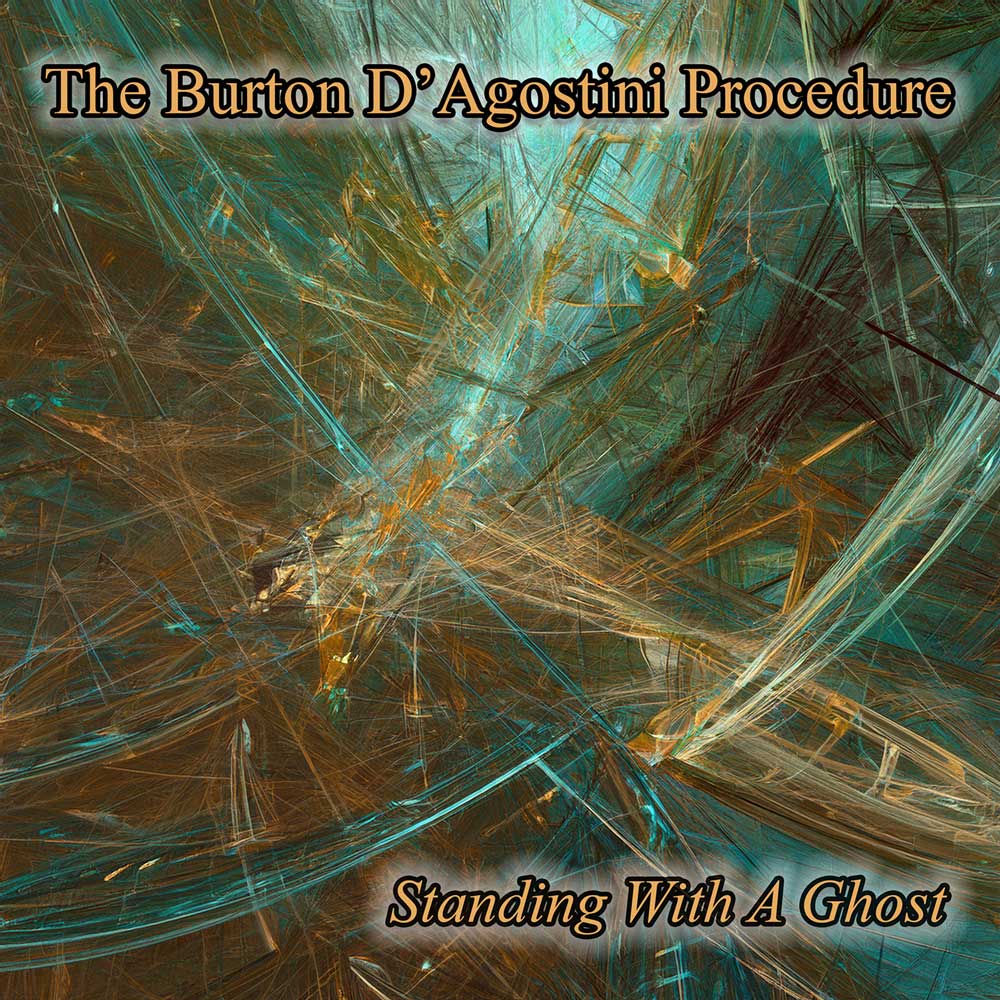
The Burton D’Agostini Procedure – Standing With a Ghost Album Review
Standing With a Ghost draws its character from contrast: pulsing rhythms meet drifting keyboards, and moments of calm carry a subtle sense of unease. The Burton D’Agostini Procedure moves between those moods across the album, creating songs that feel atmospheric without losing their distinct identities.
“Float Over Here” sets the tone with a tribal-feeling rhythm. It gives the album an immediate pulse, hooking the listener in before the record has had time to settle. Over that energy, the vocals sound hypnotic and mysterious. They don’t explain the mood so much as deepen it, giving the opening track an elusive quality that suits the album’s title.
“Strange Condition” continues the journey with a different shade of the band’s sound. As discussed in a previous article, it’s still an interesting part of the album’s sequence: it helps carry the atmosphere forward while showing the record isn’t built around one repeated idea. Each track seems to approach that mood from a slightly different angle.
“It Ain’t Love” slows the focus. A beautiful sequence of guitar chords rings out and seems to linger long after each note is played. The vocal enters softly, giving the song a close, late-night intimacy. There’s a quiet intensity here: the arrangement leaves room for the emotion to gather instead of pushing it to the surface. It’s one of the album’s most absorbing moments.
Standing With a Ghost – Sound and Atmosphere
“A Million Miles” opens the album’s sound toward something more expansive. Its futuristic touches and chord progression give it a sense of distance, while the scale of the music brings classic rock to mind. There are echoes of Pink Floyd’s spaciousness alongside a darker, cinematic quality reminiscent of Carpenter. The result feels familiar in its breadth but still has its own atmosphere.
“Circle the Sun” takes a more relaxed route. Its easy-moving rhythm and warm 1970s character create a welcome change of pace. The bass supplies a deep, undulating groove, while the keyboards add a nostalgic color without making the track feel stuck in the past. It’s an unhurried song, but the groove keeps it moving.
“We All Shine” shifts the focus again, layering lively melodies and textures into a song that rewards close listening. Rather than settling into a single mood, it keeps the ear moving between details. That sense of discovery gives the track an open, imaginative quality and provides a brighter counterpoint to the album’s more shadowed passages.
Standing With a Ghost – Dynamics and Mood
“What’s a Joke” feels suspended in its own private space. Its mystical atmosphere makes it an ideal track to hear without distractions; the music seems to invite stillness rather than demand attention. There’s a meditative quality to it, as though the song is hovering between waking thought and a dream. That slower, inward mood adds another dimension to the record.
The closing track, “There’s Something You Should Know,” begins with an intensity that unsettles the calm. Sharp, metallic guitar chords create an unstable edge, and the vocals arrive with a ritualistic quality that heightens the tension. The song doesn’t simply fade out of the album’s world; it leaves the listener with a final, haunting impression. It’s a strong ending because it gathers the record’s atmospheric and more ominous qualities into one last statement.
Standing With a Ghost works through shifts in mood rather than relying on a single sound. The rhythmic drive of “Float Over Here,” the intimacy of “It Ain’t Love,” the spaciousness of “A Million Miles,” and the unease of the closing track each give the album a different point of entry. Together, they make for a thoughtful listen with enough contrast to keep its atmosphere from becoming predictable. The Burton D’Agostini Procedure has composed a sublime and haunting record.
Transcendent
Pink Floyd • Carpenter

About Edgar Allan Poets
Edgar Allan Poets is a noir rock band built on the literary universe of Edgar Allan Poe. For over a decade the band has explored Poe's psychology, Gothic aesthetics, Victorian darkness, and his influence on modern culture — through music, writing, and this archive. Their album 555 and store collections translate Poe's darkest visions into sound and design. Read more about the band →
Reviews
Get Our T-Shirt!

Noir News


